


WWLTP | We Would Like To Play
Gaming News. Esports. Movies. Music. Culture.
Thus Begins the Console Wars
Atari, Intellivision, and ColecoVision challenged for the living room.
The First Real Fight for Home Gaming
Thus begins the console wars. This was the start of legitimate challenges to Atari’s dominance.
The Atari 2600 made cartridge-based gaming mainstream, Intellivision pushed home consoles toward smarter sports and strategy experiences, and ColecoVision brought arcade-quality ports closer to the living room than players had ever seen before.
This was not just about hardware. It was about bragging rights, commercials, living room loyalty, and the first generation of players choosing a side.
Five Images From the War

Atari 2600
The system that made cartridges famous and made the living room feel like an arcade.

Intellivision
Mattel’s more “intelligent” challenger, built around better graphics, sports strategy, and keypad controls.

ColecoVision
The arcade-quality beast that arrived with Donkey Kong and changed expectations overnight.

Space Invaders
The Atari 2600 home conversion helped push the console into superstar status.
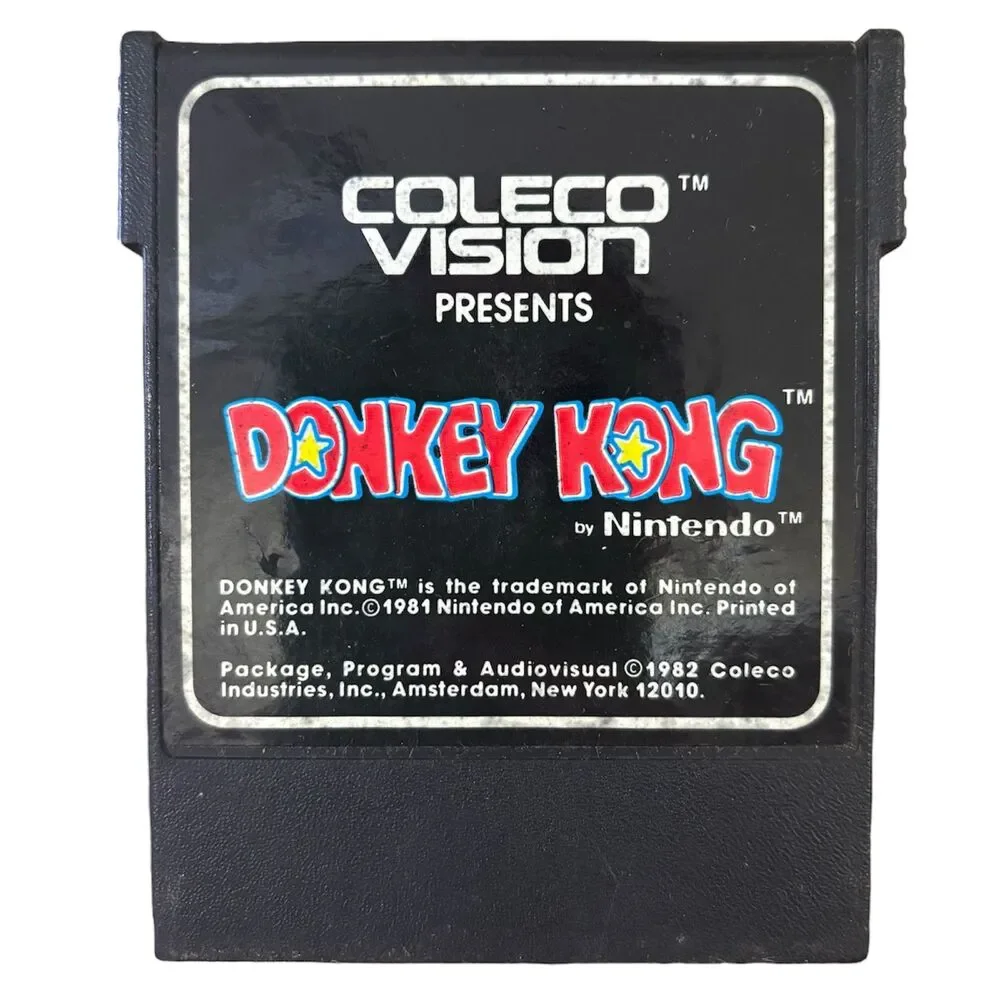
Donkey Kong
ColecoVision’s near-arcade pack-in showed what home gaming could become.
1977: Atari 2600
The Atari 2600, originally released in 1977 as the Atari Video Computer System, is one of the most influential home consoles in video game history.
Developed by Atari, the system built on earlier innovations like the Fairchild Channel F by using interchangeable cartridges, allowing players to expand their game library rather than being limited to built-in titles. That flexibility helped establish a new standard for the entire industry.
The Atari 2600 gained massive popularity in the late 1970s and early 1980s thanks to a growing library of arcade-style games. Space Invaders, the first official home conversion of the arcade hit, significantly boosted console sales. Its simple joystick controller and relatively affordable price made it accessible to a wide audience.
However, the system’s success also contributed to problems. A flood of low-quality games from third-party developers led to declining consumer confidence, culminating in the video game crash of 1983. Despite that downturn, the Atari 2600 had a remarkably long lifespan, remaining in production into the early 1990s.
The Activision Effect
Atari also had a number of very popular games made by third-party developers that enhanced its reputation. Activision released titles that were beloved by Atari gamers, and many of them looked better than games released by Atari itself.
1979: Intellivision
The Intellivision was released in 1979 by Mattel as a direct competitor to the Atari 2600, aiming to offer a more advanced and “intelligent” gaming experience.
Technically more powerful than its rival, Intellivision featured improved graphics, more detailed sound, and a wider range of gameplay possibilities. Its distinctive controllers included a numeric keypad with interchangeable overlays, allowing different control schemes for each game.
Early titles like Major League Baseball and NFL Football emphasized strategy and realism, helping the system stand out in a growing market. George Plimpton became a key figure in its success through memorable television commercials comparing Intellivision’s sports simulations to Atari’s.
The console enjoyed strong sales and built a loyal fan base, but newer competition and the video game crash of 1983 severely impacted the system. Still, Intellivision remains an important milestone that pushed home video games toward greater realism and technological ambition.
1982: ColecoVision
Phantasmagorical. I’m not sure if that’s a valid word, but it damn sure oughta be. The ColecoVision was the truth.
The ColecoVision was released in 1982 by Coleco and quickly became one of the most powerful and popular home consoles of its time. Designed to bring an arcade-quality experience into the home, it featured significantly improved graphics and sound compared to competitors like the Atari 2600 and even rivaled Intellivision in technical capability.
Its success was driven in large part by its bundled game, a near-perfect port of Donkey Kong, which showcased the system’s ability to replicate popular arcade hits. ColecoVision also became known for expandability, including an add-on module that allowed it to play Atari 2600 cartridges.
The console enjoyed strong sales and critical acclaim, but its lifespan was short. The video game crash of 1983 severely impacted Coleco, leading the company to shift focus away from video games.
ColecoVision Classics
The bottom line is that ColecoVision was the first system that could replicate many more complex arcade games almost perfectly. In some cases, you could barely see a difference.
Console Wars Timeline
Atari 2600 launches as the VCS and helps popularize cartridge-based home gaming.
Mattel releases Intellivision as a smarter, more powerful challenger to Atari.
Space Invaders on Atari 2600 helps turn the system into a household hit.
ColecoVision arrives with Donkey Kong and raises expectations for arcade-style home gaming.
The video game crash shakes the industry, ending the first major console war era.
Final Verdict
The Atari 2600 helped popularize cartridge-based gaming, Intellivision proved home consoles could be more advanced and strategic, and ColecoVision showed players that arcade-quality experiences could live in the home. Together, they shaped the early video game industry and laid the groundwork for every console war that followed.
Console War Legends
WWLTP Retro Gaming Hall of Fame