


Street Fighter:
The New Movie vs. the Original
A point-by-point comparison. Two eras. Two approaches. One legendary fighting franchise.
1994: cult-movie charisma.
2026: game-inspired spectacle.
Watch both trailers ↓ Read the comparison ↓ Movie scorecard ↓
Then & Now · The Trailers
Street Fighter (1994)
Watch 1994 trailer on YouTube ↗Street Fighter (2026)
Watch 2026 trailer on YouTube ↗From Shadaloo to the World Warrior Tournament · Gallery




The matchup at a glance
| Category | Street Fighter (1994) | Street Fighter (2026) |
|---|---|---|
| Director | Steven E. de Souza | Kitao Sakurai |
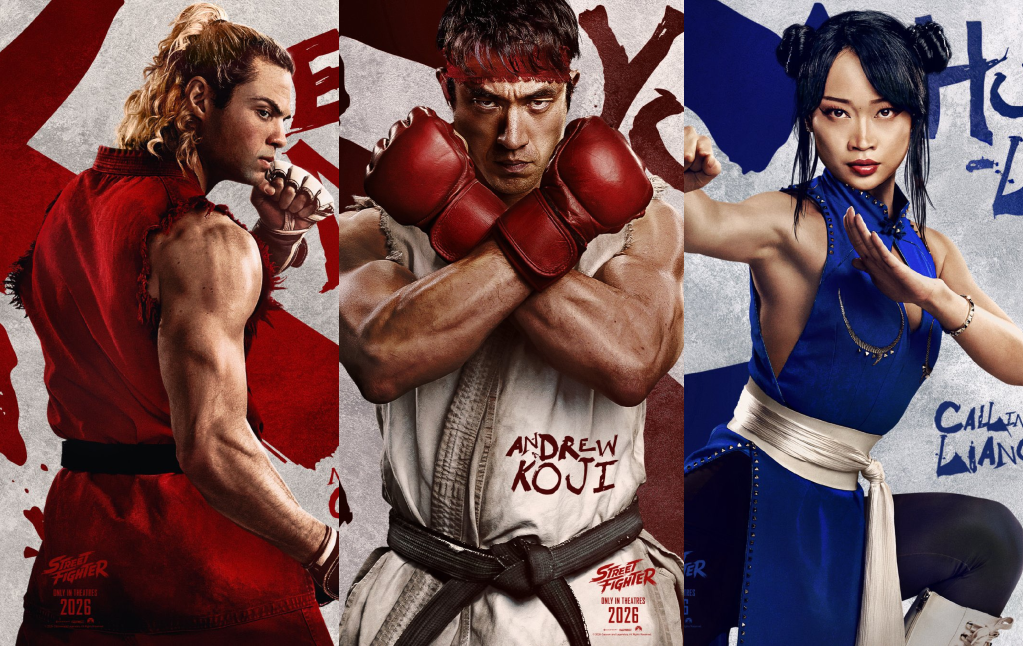
| Central heroes | Jean-Claude Van Damme’s Guile | Andrew Koji’s Ryu and Noah Centineo’s Ken |
| M. Bison | Raúl Juliá | David Dastmalchian |
| Core appeal | Military action and theatrical camp | Tournament combat and arcade identity |
The full comparison · Carnage Guild
Few video game franchises have had a stranger journey from arcade cabinets to the big screen than Street Fighter. It's a series built on colorful characters, over-the-top martial arts, world warriors, and special moves that defy the laws of physics. Translating that into a live-action movie is a challenge: get it right, and you have a thrilling martial arts spectacle; get it wrong, and you end up with a film that feels like someone mashed every button on the controller at once. The comparison between the original
Street Fighter (1994), starring Jean-Claude Van Damme, and the new Street Fighter movie is especially interesting because they represent two different eras of video game adaptations. The 1994 film became a cult favorite despite its questionable faithfulness to the games, and this is where my problems begin. See, I’m a long time gamer, starting with the Atari. The original, not that crap they came out with later. I remember spending hours playing Street Fighter on the Super Nintendo. To me, this was probably the apex of the franchise. So here comes Van Damme (who I am a fan of) and Street Fighter. While the film was a commercial success, it had little to nothing to do with the game. Essentially, they tried to jam people with names from the game into a storyline that totally omitted who they were, and most importantly, what they could do. The worst of them being “Blanka”. The most you could say is they got the colors correct. Otherwise, dude was grotesquely undernourished and lacked the all-important voltage to fry opponents. The new film has the opportunity to appeal to longtime fans while introducing a new generation to Capcom's legendary fighting franchise.
1. The movies at a glance
Street Fighter (1994) Directed by Steven E. de Souza · 102 minutes Lead: Jean-Claude Van Damme as Guile Main villain: Raúl Juliá as M. Bison Story: A military rescue mission against Bison's forces. Personality: Campy, theatrical, and unapologetically 1990s.
Street Fighter (2026) Directed by Kitao Sakurai · 119 minutes Leads: Andrew Koji as Ryu and Noah Centineo as Ken Key character: Callina Liang as Chun-Li Story: A World Warrior Tournament entangled with a dangerous conspiracy. Personality: Colorful, contemporary, and heavily inspired by the games' arcade-era identity.
2. Point-by-point comparison
I. The central storyline
1994: The film takes the sprawling Street Fighter II roster and places it inside a fairly conventional action movie. Guile, who looks nothing and I mean NO-THING like the game character leads an international military force against General M. Bison to rescue hostages. The fighting-game tournament takes a back seat to military strategy, explosions, and hostage rescue.
2026: The reboot puts Ryu, Ken, and Chun-Li much closer to the center of the story. The World Warrior Tournament provides the framework for bringing numerous fighters together, while a conspiracy involving Bison adds a larger threat.
Verdict: The 2026 film is more recognizably structured around the games. The 1994 movie is closer to a military action blockbuster that happens to feature Street Fighter characters.
II. Faithfulness to the video games
1994: The film takes considerable liberties with the source material. Guile becomes the primary hero, Bison becomes a military dictator, and many fighters are repurposed to fit the rescue plot. The costumes and character names are recognizable, but the game mechanics and rivalries are often secondary.
2026: The reboot makes a more deliberate effort to restore the franchise's tournament culture, signature fighting styles, familiar character designs, and colorful personalities. Its creators also worked with Capcom to balance the source material with an original cinematic story.
Verdict: The new movie wins on overall game-inspired presentation.
III. The main heroes: Guile vs. Ryu and Ken
1994 — Guile Van Damme's Guile is the film's driving force. He's the military commander, the motivational speech dispenser, and the man expected to save the day. It makes sense for an action movie, even if it shifts the spotlight away from the franchise's central martial artists. However, this is also the problem. Using a major star like Van Damme as a character almost demands that you form the film around him. You lose the star power if you have an action star of his caliber but then relegate him to the minor or subordinate role.
2026 — Ryu and Ken Andrew Koji's Ryu and Noah Centineo's Ken are former training partners whose relationship has fractured. Their reunion provides the emotional foundation for the tournament and its conflicts. The story gives their friendship and rivalry more room than the original film did.
Verdict: The new film is more faithful to the spirit of the games' central rivalry. The 1994 film benefits from Van Damme's established action-star presence, but its focus on Guile makes the ensemble feel less balanced.
VI. The villains: Raúl Juliá vs. David Dastmalchian
1994 — Raúl Juliá as M. Bison Juliá's performance is the original film's secret weapon. He plays Bison with grand theatrical conviction, treating a gloriously ridiculous villain as though he were a Shakespearean tyrant. His odd since of honor mixed with his quirky comments, interplay with the character Dee Jay and his occasional ruthlessness, gives the film much of its enduring cult appeal.
2026 — David Dastmalchian as M. Bison Dastmalchian brings his own eccentric screen presence to the role. Early reviews have singled him out as a highlight, with some critics noting the old-school villainous grandeur that recalls Juliá's approach.
Verdict: This is the toughest contest to call. Juliá's performance is already legendary among fans of the original. Dastmalchian offers a fresh interpretation, but he has an enormous legacy to contend with. Bison is supposed to be larger than life; the challenge is making him feel like a character rather than a Halloween costume with a world-domination budget.
V. The supporting cast and character roster
1994: The film features Chun-Li, Cammy, Zangief, E. Honda, Balrog, Dee Jay, and others, but the military plot often pushes the fighters into supporting roles. Some character personalities are radically different from their game counterparts. Case and point, Dhalsim in this version was relegated to being a scientist with no powers and a sense of morality. Please, someone tell me what the hell that has to do with the game. Sagat (one of my favorite fighters) was a gun runner and Vega his henchman.
2026: The reboot assembles a broad roster, including Guile, Akuma, Blanka, Dhalsim, Vega, Zangief, E. Honda, and Balrog. The cast combines established actors with martial artists, professional wrestlers, musicians, and comedians.
Verdict: The new film makes the roster feel more like an attraction in its own right. The risk is overcrowding: when nearly everyone is an iconic character, not everyone can get a meaningful story. I would have liked them to be able to build on each character and get into them with greater depth. However, I realize this is Street Fighter and not Shogun.
VI. Martial arts and fight choreography
1994: The action is built around the conventions of 1990s Hollywood: physical confrontations, explosions, military assaults, and relatively grounded stunt work. It has moments of fighting- game flavor, but it rarely feels like watching a match unfold in the arcade.
2026: The action puts greater emphasis on recognizable fighting styles and signature moves. The production used specialized stunt performers, practical effects, and visual effects to bring the fighters' distinct abilities to the screen. Paramount's production account describes 14 major fight sequences.
Verdict: The reboot has the advantage in translating the game's spectacle into cinematic action. Still, elaborate choreography is only effective when viewers can follow the fight and care about who wins.
VII. Tone and humor
1994: The original is a wonderfully peculiar mixture of military drama, action-comedy, and melodrama. The dialogue can be unintentionally hilarious, while Juliá's extravagant villainy turns many scenes into memorable camp.
2026: The new film leans into the franchise's colorful, exaggerated identity and its early-1990s cultural roots. Its humor is more knowingly playful, but some early critics have argued that the jokes and juvenile comedy undermine the story.
Verdict: The original is arguably funnier by accident; the reboot is more deliberate about being outrageous. Neither approach will work for viewers who want a completely serious martial arts drama. However, if that is what you were looking for, why are you playing Street Fighter, you would be better off playing Sifu.
VIII. Visual style and costumes
1994: The film's costumes and character designs are products of their time. Some look impressively faithful, while others resemble cosplay assembled for a very expensive corporate costume party. Its practical sets and physical locations give it a tangible 1990s action-movie aesthetic.
2026: The reboot aims for a more vivid, game-inspired look, retaining recognizable character silhouettes while using modern cinematography, effects, and stunt technology. Its production team also incorporated hand-drawn animation into flashback sequences to evoke the era of classic Japanese animation.
Verdict: The new film has the technological advantage. But the original's sometimes-awkward visual identity is part of its charm; you can practically hear a CRT television humming in the background.
IX. Emotional depth and character development
1994: Guile's mission and Chun-Li's personal vendetta against Bison provide the emotional stakes. However, the large cast and military-action framework leave limited room for deeper exploration of most fighters.
2026: The fractured relationship between Ryu and Ken gives the reboot a more personal foundation. Ryu's search for peace, Ken's personal struggles, and Chun-Li's own motivations provide character conflicts beyond simply defeating the next opponent.
Verdict: The reboot has the stronger premise for character development. Whether it fully delivers is another question: a more ambitious story can still be weakened by hurried pacing or too many competing plotlines.
X. Overall reception and legacy
The early critical reception of the 2026 film is mixed, while the 1994 movie remains a widely recognized example of the entertainingly flawed video game adaptation. Category 1994 film 2026 film Biggest strength Raúl Juliá's Bison and camp appeal Game-inspired action and larger roster Biggest weakness Story and characterization Story coherence and juvenile humor Long-term reputation Cult action-comedy Legacy still developing
Verdict: The new film appears to be doing better with audiences and critics than the 1994 version at this early stage, but it has not escaped the storytelling problems that have plagued video game adaptations for decades.
3. The biggest differences at a glance
Feature 1994 Street Fighter 2026 Street Fighter Narrative focus Guile's military mission Ryu and Ken's fractured friendship Main attraction Van Damme and Raúl Juliá A large ensemble of game characters Fighting style Conventional action choreography More elaborate, game-inspired combat Villain portrayal Theatrical, memorable camp A new interpretation of Bison Humor Often unintentionally funny Intentionally outrageous, sometimes juvenile Game accuracy Loose adaptation Closer to the game's tournament format Nostalgia factor Pure 1990s action cinema 1990s arcade culture revisited Main drawback Inconsistent characterization Overstuffed plot and uneven storytelling
4. Which movie does a better job?
Best for cult-movie entertainment: 1994 The original has an undeniable personality. It is loud, ridiculous, and occasionally absurd, but Juliá's Bison elevates the experience. It has the charm of an action movie that never quite understood how ridiculous its source material could be—and accidentally made that its greatest strength.
Best for modern game-inspired spectacle: 2026 The reboot makes a more serious effort to bring the tournament, character designs, and signature fighting styles to life. It has the advantage of modern filmmaking technology and a cast built around a broader selection of familiar fighters. Its weaker storytelling, however, prevents those advantages from automatically making it the better film.
5. Final verdict: Has the new movie finally beaten the old one?
My take is that the two movies executed their jobs in completely different ways. The 1994 film tried to turn Street Fighter into a Hollywood military action movie. It sacrificed most of the games' personality in the process. The film pretty much abandoned the spirit of the game to make a standard action film with game characters. However, it did give us Raúl Juliá delivering one of the most gloriously over-the-top villain performances in video game movie history. The 2026 film takes the opposite approach. It embraces the fighters, the tournament, the signature moves, and the visual excess that made the games memorable in the first place. Yet it also demonstrates that recognizing a source material is not the same as knowing how to tell a compelling story with it. Nevertheless, as a gamer I relished in the authenticity and attention to detail that was present in this iteration. Ultimately, I give the new film the edge in representing the video game. The reboot has a better understanding of what Street Fighter looks like and was supposed to be. And there's the delicious irony: after more than three decades, Hollywood has become much better at putting video game characters on screen, but it still occasionally struggles with the deceptively simple task of giving them a good story. Sometimes all you need is a great rivalry, a memorable villain, and a satisfying fight. In other words, the very things that made Street Fighter an arcade legend in the first place.
WWLTP Movie Scorecard
Category scores supplied by Donald Kipkin, aka “Carnage Guild.” Overall ratings are the average of the five categories: 1994 — 41.4/100; 2026 — 88/100.
1994
Practical 1990s action aesthetic.
2026
Vivid, game-inspired spectacle.
1994
Military action and stunt work.
2026
Signature moves and tournament combat.
1994
Raúl Juliá’s Bison is the standout.
2026
Ryu and Ken return to the center.
1994
Guile’s military rescue mission.
2026
Fractured friendship and a tournament conspiracy.
Cult charisma meets arcade authenticity.
The original has Raúl Juliá’s unforgettable Bison. The new film gets the edge in representing the video game. A recognizable roster still needs a great rivalry, a memorable villain, and a satisfying fight.
Keep Exploring WWLTP
Film references: Universal · Street Fighter (1994) / Paramount · Street Fighter (2026). Images belong to their respective owners. Comparison and opinions supplied by the author.